
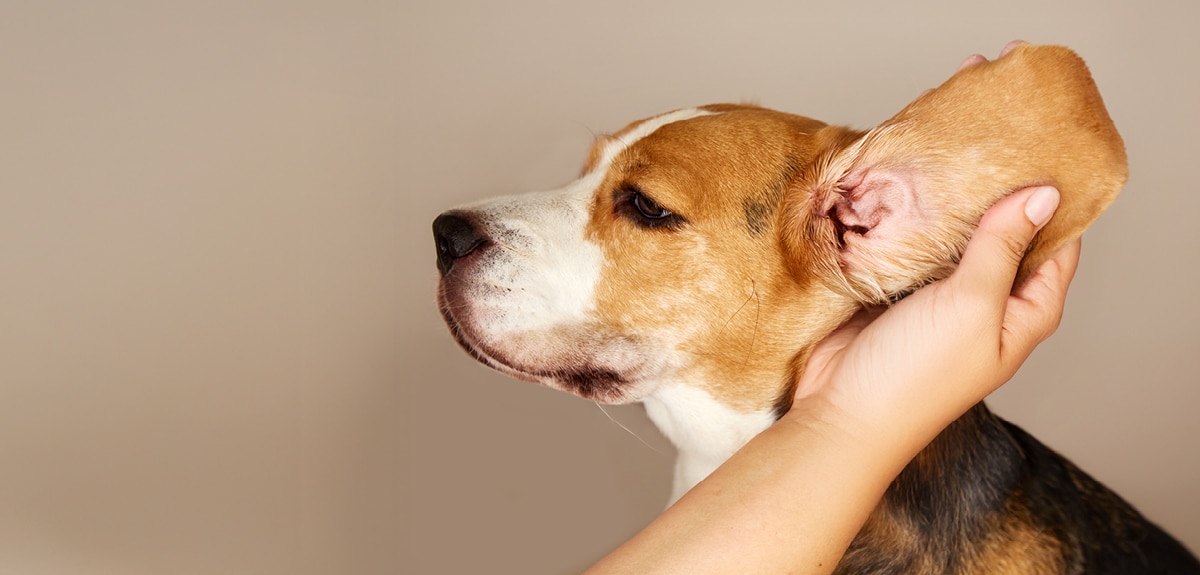
If your dog or cat suddenly starts shaking their head persistently and their ear becomes swollen, it’s normal to be concerned. However, while ear hematomas may appear impressive, they generally respond well to treatment when addressed promptly. Here’s all you need to know.
What is an ear hematoma?
An ear hematoma, or aural hematoma, is a condition caused by broken blood vessels within the ear flap, causing the ear flap to swell like a balloon. Most often these small blood vessels break due to vigorous headshaking. The extra weight of the fluid-filled ear flap can cause pain and discomfort and can lead to permanent damage to the cartilage of the ear. Both cats and dogs can be affected by this condition, and the ear flap can be partially or fully filled with fluid. Depending on the size and location of the hematoma, not all cases need direct veterinary treatment. However, more often than not, one or more interventions are needed to treat a hematoma, therefore a veterinary consultation is always recommended.
When should we treat or repair a hematoma?
- If an ear infection cannot be treated because the hematoma is so large that it blocks the ear canal. Ear infections are often the predisposing cause of hematomas because they are itchy and cause headshaking, especially in dogs.
- If the hematoma risks narrowing the ear canal. Scar tissue in the wrong place can cause the canal to narrow, promoting infections and making cleaning difficult. This problem particularly affects cats and small dogs.
- For cosmetic reasons. An untreated hematoma can lead to a wrinkled or deformed ear flap (commonly referred to as a “cauliflower ear”). For owners that are concerned with the look of the ear flap, surgical intervention is usually needed to decrease the chances of scarring.
- If there is significant pain and discomfort caused by the hematoma.
What are the available treatment options?
- Aspiration: fluid is removed with a needle and syringe. This procedure can be done quickly and is usually inexpensive. However, fluid can easily leak into the empty space left behind, which means the fix is often only temporary. Repeated attempts may be needed, and infections can occur from multiple needle insertions.
- Teat cannula: a draining device is inserted into the ear flap to allow draining of fluid over time. Teat cannulas are usually used in bovine medicine to treat udder inflammation and infections. They can also be used in small animal medicine if the ear flap is thick enough to allow insertion of the cannula. The treatment is usually successful; however, the animal must tolerate the device for potentially several weeks. Additionally, the drained fluids can be messy.
- Surgical correction: the hematoma is drained and then the ear flap is sutured in multiple areas to prevent fluid from reaccumulating. A bandage may be applied after surgery and sutures are left in place for several weeks to allow healing. This method is more often used for cats, as their ear is more prone to scarring leading to a narrowed ear canal.
In conclusion, ear hematomas are relatively common in dogs and cats. They arise from vigorous headshaking often secondary to ear infections. A veterinary consultation will help determine which treatment option is best for your pet.