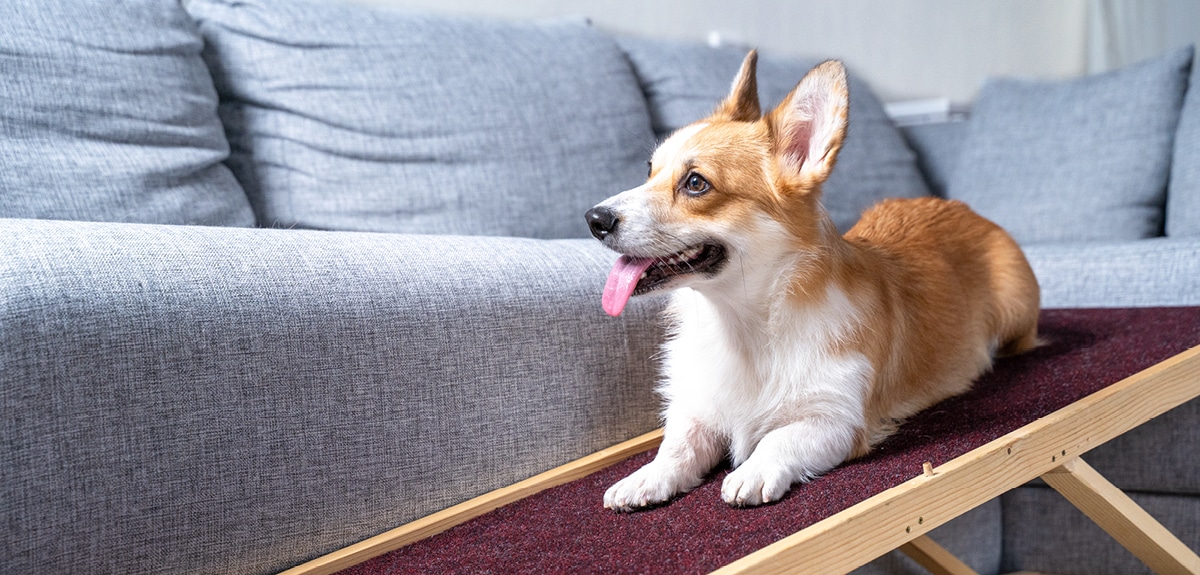

Is your furry companion getting older? Recovering from surgery or dealing with arthritis? A dog ramp can be a valuable tool to help avoid jumping on and off the couch, bed or car trunk. But let’s be honest, most dogs look at it like they’re being asked to cross a suspension bridge over a volcano. And honestly, we get it!
Choosing the right dog ramp is not as simple as it seems
Before buying the first ramp you see, there are a few key things to consider.
- Length: A ramp that is too short creates a steep incline that can feel intimidating and unsafe. The longer the ramp, the gentler the slope and the more confident your dog will feel.
- Width: Some ramps are so narrow that a medium-sized dog may feel unsteady. If possible, choose a wider model, especially for larger breeds.
- Non-slip surface: This is essential. A dog that slips even once may refuse to use the ramp again. Also check stability. If the ramp moves or wobbles under their weight, the experience may end before it even begins. Make sure it is sturdy enough to support your dog while still being light enough to handle easily.
Quick tip
There are also step platforms that attach to your vehicle’s hitch. Discreet and practical, they create an intermediate step to help your dog get in and out of the trunk more easily.
The real challenge: your dog doesn’t know what a ramp is
Buying a great ramp is one thing. Teaching your dog to use it is another.
A dog that has never walked on an incline may feel unsure. It challenges their balance, coordination and sometimes their strength. Going up requires effort. Going down head first can feel even more intimidating, especially as mobility decreases.
That is why it is recommended to introduce your dog to inclined surfaces as early as possible, especially for large breeds. Do not wait until the ramp becomes a medical necessity.
In the same way, veterinarians often recommend getting cats used to canned food early on to make dietary transitions easier later in life. The idea is the same. It is always easier to learn when everything is going well.
Make it easier to use the ramp (and protect your back)
To support your dog, a harness or lifting strap can make a big difference, not just in the beginning.
For dogs with mobility issues, this kind of support often becomes essential, especially when getting out of a vehicle. It helps them feel secure, maintain balance and approach the descent with more confidence.
If they slip or hesitate, you can step in quickly without putting strain on your own back. This is especially helpful with larger dogs. Take it slow, reward generously and never force your dog.
The best ramp? The one that your dog will accept
There is no one-size-fits-all ramp. The right choice depends on your vehicle, your environment, your dog’s size and their specific needs.
One thing is certain: the best dog ramp is the one your furry friend is willing to use. And getting them used to it should start long before it becomes a necessity.