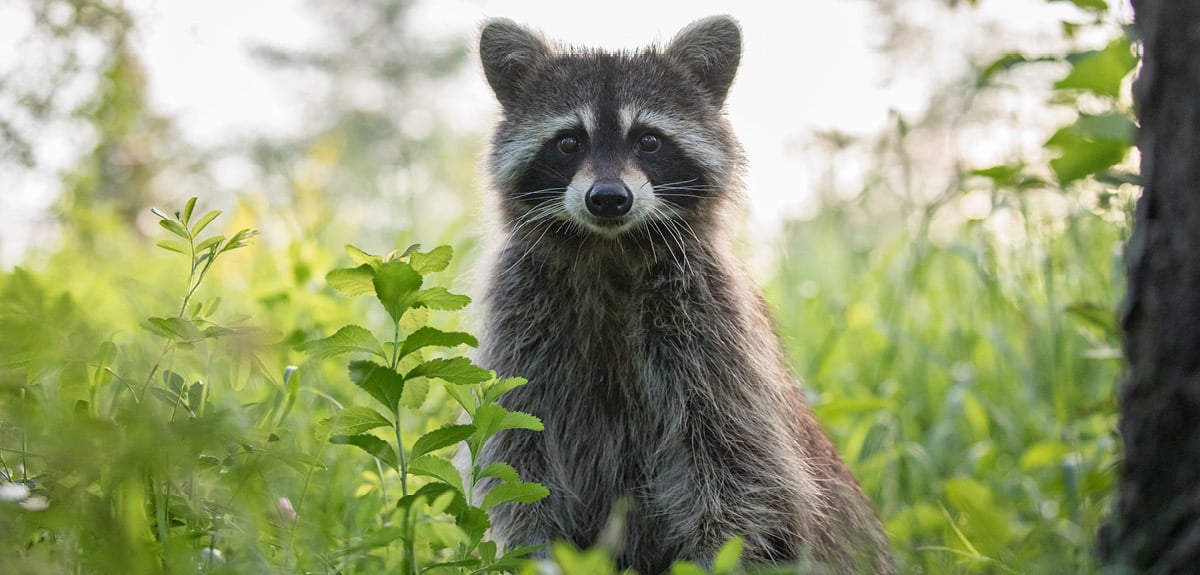

You’ve probably heard about it in the media: cases of raccoon rabies ave increased significantly in southern Quebec. From January to July 2026, 126 cases were confirmed in raccoons and skunks*. A stray cat in the Montérégie region and another in Estrie have also been infected. That’s more cases than in all of 2025.
The situation deserves our attention. Rabies is a fatal disease that can affect both animals and humans. But there’s no need to panic: a few simple precautions can help reduce the risks. Here’s what you need to know to protect your family and your pets.
What is rabies?
Rabies is a disease caused by a virus of the Lyssavirus genus. It can affect all mammals, although some are more at risk than others. Several species of wildlife can transmit the disease, including foxes, skunks, raccoons, coyotes, and bats.
The virus is mainly transmitted through the saliva of an infected animal, most often through a bite. More rarely, it can enter the body when infected saliva comes into contact with a wound or mucous membrane.
Once inside the body, the virus travels along the nerves to the brain. The time between the exposure and the onset of symptoms can therefore vary depending on where the person or animal was bitten.
Once symptoms appear, rabies is almost always fatal. That’s why prevention and prompt action following a potential exposure are so important.
What are the symptoms of rabies in animals?
Rabies can present in different ways:
- The furious form: This initial phase is not always present. The animal becomes abnormally aggressive. It may bite, scratch, or attack objects, other animals, or people. It may also become hypersensitive to sounds or light, appear disoriented, and develop a fever. If the animal does not die during this phase, the disease may progress to the second form.
- The paralytic form: The animal gradually becomes paralyzed. It may salivate excessively and have difficulty swallowing. As the paralysis progresses, it can eventually impair the animal’s ability to breathe.
It’s important to remember that an animal with rabies is not necessarily aggressive.
A definitive diagnosis requires laboratory testing after the animal’s death, particularly on brain tissue.
How can you protect your dog or cat against rabies?
Since there is no treatment that can cure rabies once symptoms appear, prevention is essential.
One of the simplest ways to protect your pets is to have them vaccinated against rabies and keep their vaccinations up to date. Even an indoor pet can escape one day or come into contact with a wild animal.
You should also avoid approaching or handling any wild animal that appears sick, injured, disoriented, paralyzed, or unusually aggressive.
If you see a raccoon, skunk, or fox behaving suspiciously, report it to the appropriate authorities by calling 1-877-346-6763 or by completing the following online form: Report a potentially rabid animal
What should you do after a bite or potential exposure?
If you are bitten by a domestic or wild animal, immediately wash the wound with soap and water. Then contact Info-Santé at 811 as soon as possible or consult a doctor for appropriate recommendations.
If your dog or cat is bitten by an animal or comes home with a wound of unknown origin, clean the wound with soap and water and contact your veterinary team as soon as possible. They will be able to assess the situation and advise you on the appropriate steps to take.
Vigilance, vaccination, and prevention
The recent increase in raccoon rabies cases in Quebec is a reminder that this disease must be taken seriously. Fortunately, there are simple ways to reduce the risks.
Keep your pets’ vaccinations up to date, avoid contact with wild animals, and know what to do after a potential exposure.
A few simple precautions can help protect the whole family—including your cats and dogs!
*Source: Government of Quebec – Rabies in animals
–
Other articles to read (French only) :