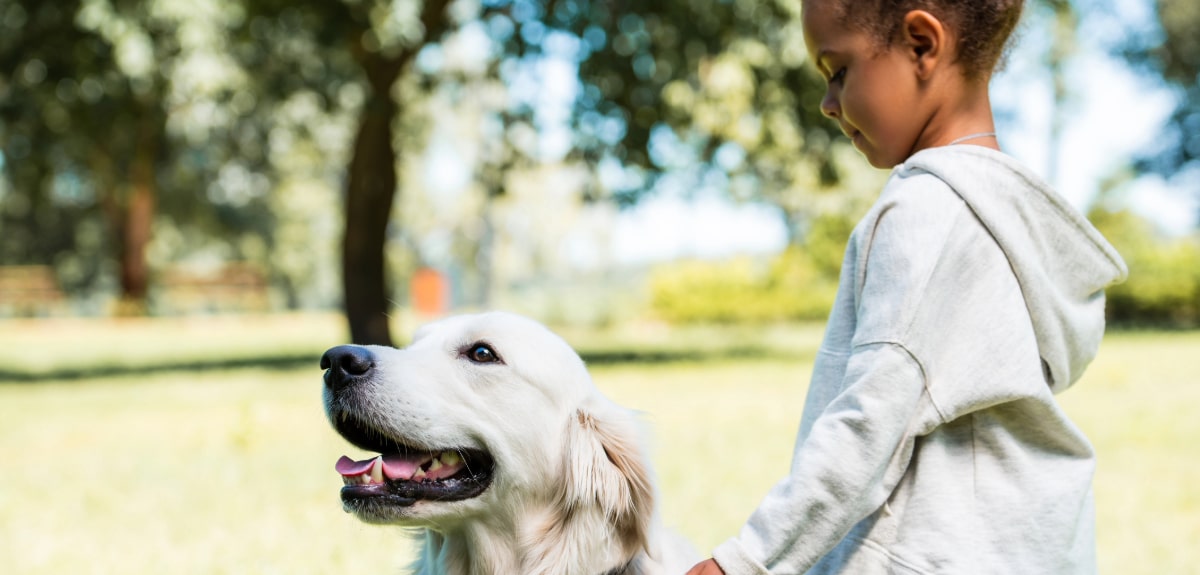
Does your dog let children pull on their ears, tolerate hugs that are a little too tight, and remain calm when kids bother them? That’s reassuring, but it doesn’t mean every interaction is risk-free. Even the most patient companions have their limits. To prevent bites, it’s essential to teach children to respect dogs and recognize when it’s best to leave them alone.
Why are children at greater risk of dog bites?
During my veterinary behaviour consultations, I always take an interest in how the dog fits into family life. When children are part of the dog’s life, I take the time to ask about their interactions, even if the owners haven’t expressed any concerns.
Why? Because children are among the most common victims of dog bites, particularly boys¹. Contrary to popular belief, most of these incidents involve a dog the child already knows.
Among younger children, bites frequently occur even when a parent is present. What’s even more surprising is that they often happen during a positive interaction initiated by the child while the dog was resting.
Why isn’t a tolerant dog necessarily a dog that poses no risk
During consultations, well-meaning owners often tell me they have no concerns because their dog tolerates children’s behaviour perfectly well. Even when a child bothers the dog, gets a little rough, or accidentally pulls on their fur or ears, the dog simply puts up with it. They don’t growl or bare their teeth.
I don’t doubt that these people have a “good” dog. But these situations always lead me to discuss an essential question with them: what should children’s safety depend on?
All the owners I discuss this with share the same goal: preventing a child they know from being bitten. However, achieving this goal means not relying solely on their furry companion’s patience. It’s just as important to teach children how to behave appropriately around dogs.
Imagine a child who is used to pulling a dog’s ears or hugging them tightly because the dog accepts everything without protesting. That child may repeat these behaviours with a dog belonging to a friend or family member who is less tolerant. And this time, the reaction could be very different.
We must also remember that all dogs can bite, even those that have always tolerated everything! A dog that is sick or uncomfortable may have much less patience than usual.
What behaviours should children be taught around dogs?
To encourage safe interactions, a few simple rules should be taught from an early age:
- Ask an adult for permission before interacting with a dog.
- Never disturb a dog that is sleeping, resting, or eating.
- Let the dog come to you rather than approaching them.
- Gently pet the dog with one hand, without trying to hug them.
- Never pull on their fur, ears, or tail.
One resource I particularly like recommending to families is The Family Dog’s “I Speak Doggie” song. Its simple, expressive illustrations make it easy to understand which behaviours to encourage.
How should interactions between dogs and children be supervised?
Teaching children appropriate behaviours is essential, but responsibility for their safety remains with adults. Supervision must be active. Simply being in the same room isn’t enough: adults need to observe interactions and pay attention to the dog’s reactions. To do this, it’s important to learn how to interpret canine body language to reduce the risk of bites.
As soon as a dog shows signs of stress, an adult should step in to stop or redirect the interaction.
Good habits to help prevent dog bites
Having a patient dog is a blessing for any family, but their tolerance should never be put to the test. By teaching children to respect a dog’s boundaries and carefully supervising their interactions, adults can help prevent bites.
The goal isn’t to teach dogs to tolerate everything, but to teach children how to behave appropriately around them.
¹ “Dog Bites in Children: A Descriptive Analysis” – McGuire, C., Morzycki, A., Simpson, A., Williams, J., & Bezuhly, M. (2018). Dog bites in children: A descriptive analysis. Plastic Surgery, 26(4), 256–262.