
Skip to content
  • FAQ
  • Contact Us
  • Français
  • Boutique en ligne Online Store Infolettre Newsletter
Flair & cieFlair & cie
  • Veterinary establishments
    • Clinique vétérinaire 440
    • Clinique vétérinaire Animomédic
    • Clinique Vétérinaire Dollard
    • Clinique vétérinaire Lac St-Louis
    • Clinique vétérinaire de Beaconsfield
    • Hôpital vétérinaire Le Gardeur
    • Hôpital vétérinaire du Nord
    • Hôpital vétérinaire de Montréal
    • Clinique vétérinaire Pintendre
    • Clinique vétérinaire Morin-Heights
  • Flair & cie
    • History and Values
    • Lucie Hénault
    • News
    • Flair in the media
  • Magazine
  • Career
  • Boutique en ligne Online store
Back
Cats

How to properly move your cat carrier

Dre Isabelle Demontigny-BédardDre Isabelle Demontigny-Bédard

You have chosen the carrier you want for your cat, and your cat has become familiar with it. Here are three practical tips for transporting your cat safely and with minimal stress.

1. Avoid sudden movements

Always hold your cat’s carrier with both hands, from underneath or on the sides, as if it were a box containing fragile items. If you use the top handle, always stabilize the carrier with your other arm. This will reduce jolts and make the journey more comfortable for your pet.

2. Reduce visual stimuli

When travelling, keep the carrier at chest height to avoid direct encounters with other cats or animals. In a waiting room, place it on a table or on your lap, never on the floor. A small table may have been conveniently placed in the room for this purpose. If not, your lap will do!

Covering the carrier with a blanket or towel will also help reduce your kitty’s stress by limiting visual stimuli (like strangers or other animals).

3. Prioritize safety in the car

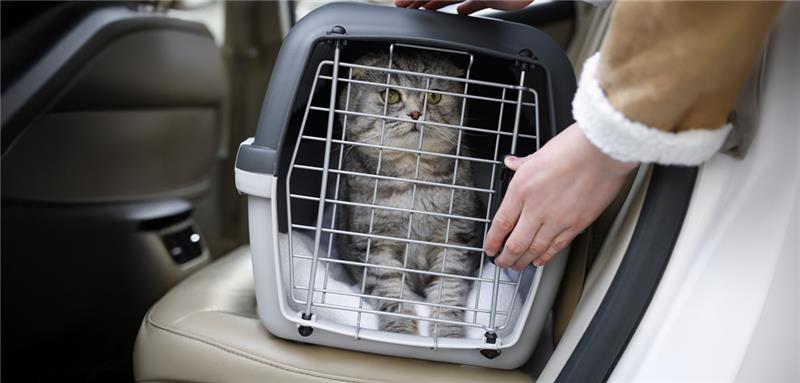
When travelling by car, always place the carrier in a stable location:

  • on the floor behind the passenger seat, wedged securely so that it cannot move,
  • or on the back seat, securely fastened with the seat belt.

These precautions will ensure your cat travels safely in the car, while also helping to reduce its stress levels.

In short, well-planned transportation is the key to protecting your cat and reducing its stress. By handling the carrier correctly, limiting stimuli, and securing it in the car, you can make the trip much more pleasant for your companion. Adopting these simple steps will ensure your cat travels safely while enhancing its well-being.

Auteur.trice:

Dre Isabelle Demontigny est diplômée de la Faculté de médecine vétérinaire de l’Université de Montréal depuis 2010. Après un début en médecine générale, elle se spécialise en comportement animal, complète une résidence sous la supervision de Dre Diane Frank et obtient en 2015 son titre de vétérinaire comportementaliste certifiée par l’American College of Veterinary Behaviorists (ACVB). Elle détient aussi une maîtrise (2017) sur le pica chez le chat. Active dans son domaine, elle contribue aux activités de l’ACVB, donne des conférences et publie des articles scientifiques. Dre Demontigny s’est joint à Flair & cie comme associée en 2021, en tant que gestionnaire propriétaire de la Clinique vétérinaire Dollard. Sa pratique en tant que vétérinaire spécialiste en comportement repose sur une approche personnalisée et rassurante, où le bien-être émotionnel est central. Elle adapte chaque intervention pour réduire l’anxiété et préserver le lien humain-animal, une vision pleinement alignée avec celle de Flair & cie.

Heureux et en santé à tous les stades de sa vie !

Procurez-vous le tout récent livre de Dre Lucie Hénault, vétérinaire. Du museau à la queue, c’est le guide parfait pour mieux comprendre la santé de votre ami poilu.

COMMANDEZ VOTRE LIVRE

×

DISCOVER MORE

Reliable veterinary information, free of charge!
Flair & cie vous partage l’expertise de ses experts en santé animale.

Why does my dog eat grass?

READ
Flair & cie receives a Distinction Award for health and wellness in the workplace

We are proud to announce that Flair & cie has received a cœsion SP Distinction...

READ
Why is my dog panting even when they’re not hot?

When a dog pants, they breathe rapidly with their mouth open, often with their tongue...

READ
All our articles
  • Veterinary establishments
  • Flair & cie
  • Magazine
  • Career
  • Contact Us
  • PRIVACY POLICY
  • TERMS OF USE

FLAIRETCIE © 2026

[email protected]
  • Veterinary establishments
    • Clinique vétérinaire 440
    • Clinique vétérinaire Animomédic
    • Clinique Vétérinaire Dollard
    • Clinique vétérinaire Lac St-Louis
    • Clinique vétérinaire de Beaconsfield
    • Hôpital vétérinaire Le Gardeur
    • Hôpital vétérinaire du Nord
    • Hôpital vétérinaire de Montréal
    • Clinique vétérinaire Pintendre
    • Clinique vétérinaire Morin-Heights
  • Flair & cie
    • History and Values
    • Lucie Hénault
    • News
    • Flair in the media
  • Magazine
  • Career
  • FAQ
  • Contact Us
  • Français
  • Boutique en ligne Online Store Infolettre Newsletter