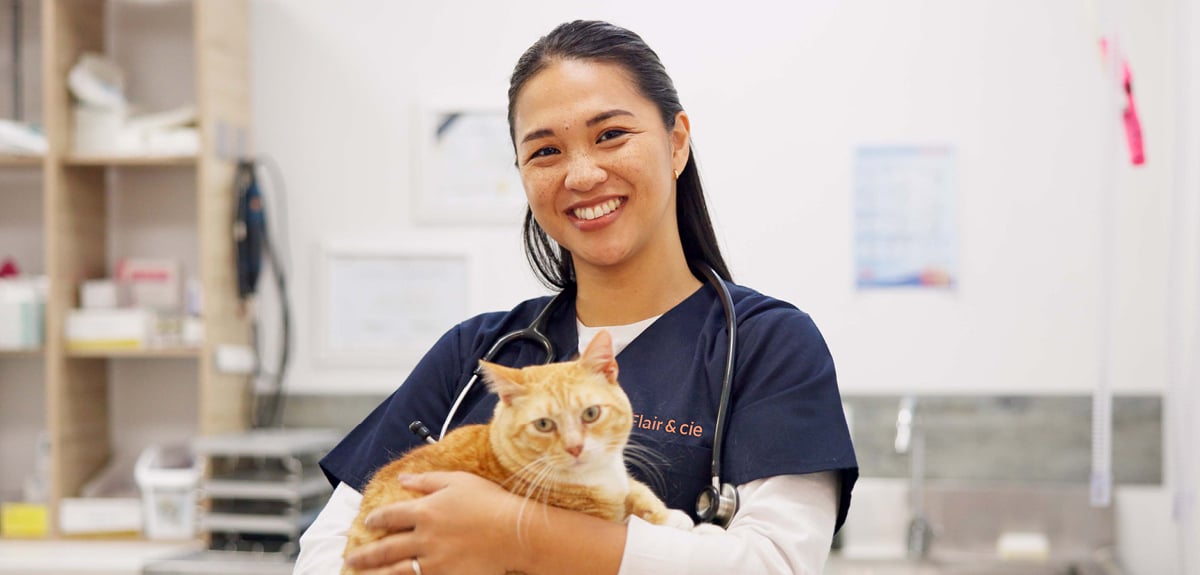
When a pet needs surgery, many owners mainly picture the veterinarian’s work during the procedure. Yet long before the animal enters the operating room, veterinary technicians carry out a series of essential steps. Preparing equipment, monitoring the patient, providing preoperative care and supporting owners: their role is central to ensuring your dog’s or cat’s safety and comfort. Let’s take a closer look.
Welcoming and assessing your pet before surgery
As soon as your companion arrives at the clinic, a veterinary technician welcomes them and assesses their overall condition. This initial assessment includes:
- weighing your pet;
- taking their temperature;
- checking their heart rate;
- and checking their breathing.
The veterinary technician also makes sure that preoperative instructions have been followed, such as fasting or administering any medications prescribed before surgery, like a sedative.
Reassuring owners
Veterinary surgery is often very stressful for pet owners. Veterinary technicians play an important role in supporting families. They take the time to explain how the day will unfold, answer questions and offer reassurance. Building trust is an integral part of the veterinary care team’s responsibilities.
Good to know: The veterinarian overseeing the anaesthesia will always perform a complete examination of your pet before proceeding.
Constant monitoring before the procedure
Once your pet has been admitted, they are settled comfortably in a cage or enclosure near the veterinary team. This allows the team to monitor your pet continuously before and after the procedure to make sure they remain calm and comfortable.
Preparing the veterinary operating room
Meanwhile, the veterinary technician prepares all the equipment and supplies needed for the day’s surgeries.
This includes:
- sterile surgical instruments;
- anaesthesia equipment;
- medications;
- and anaesthesia monitoring devices.
The day before surgery, the operating room is also cleaned and disinfected according to strict protocols to maintain a safe, sterile environment.
Preoperative care before anaesthesia
Before the procedure, the veterinary technician may provide preparatory care, including:
- drawing blood for preoperative testing;
- placing an intravenous catheter;
- and administering prescribed medications to help your pet remain calm and comfortable.
Throughout this preparation, the technician carefully monitors the patient’s overall condition.
So, even before the veterinarian begins surgery, much of the work is already underway thanks to veterinary technicians. Their role is essential to ensuring animals’ comfort, safety and well-being during their time at the clinic. Remember to thank them the next time your pet has surgery!