Skip to content
  • FAQ
  • Contact Us
  • Français
  • Boutique en ligne Online Store Infolettre Newsletter
Flair & cieFlair & cie
  • Veterinary establishments
    • Clinique vétérinaire 440
    • Clinique vétérinaire Animomédic
    • Clinique Vétérinaire Dollard
    • Clinique vétérinaire Lac St-Louis
    • Clinique vétérinaire de Beaconsfield
    • Hôpital vétérinaire Le Gardeur
    • Hôpital vétérinaire du Nord
    • Hôpital vétérinaire de Montréal
    • Clinique vétérinaire Pintendre
    • Clinique vétérinaire Morin-Heights
  • Flair & cie
    • History and Values
    • Lucie Hénault
    • News
    • Flair in the media
  • Magazine
  • Career
  • Boutique en ligne Online store
Back
Cats, Dogs

Are essential oils toxic to animals?


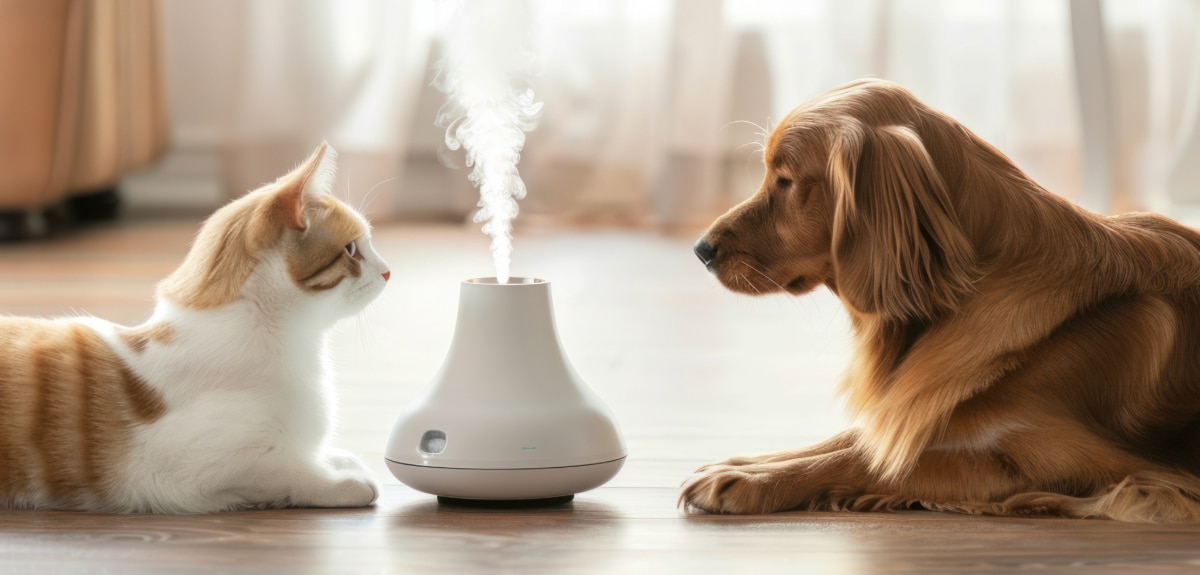
The growing use of essential oils in everyday life, whether in perfumes, household products or aromatherapy, is attracting increasing interest. These products are often perceived as healthy and natural alternatives. However, their high concentration of active substances can pose a risk to our four-legged friends.

Our pets, especially cats, appear to be more sensitive to the toxicity of certain essential oils. Symptoms of poisoning vary depending on the route of exposure, whether respiratory, dermal, or oral when an animal licks oil from its fur. The most common signs include gastrointestinal, neurological and respiratory issues, as well as skin irritation.

Because cats groom themselves frequently, they are often more affected. Essential oils are lipophilic, meaning they are easily absorbed through the skin, respiratory tract and digestive system. These substances can quickly penetrate muscle and fatty tissues, including nerve tissue.

Studies still limited

Unfortunately, research on the mechanisms behind essential oil poisoning in animals is still limited. Toxicological studies often focus on individual components rather than the combined effects of multiple compounds. As a result, there are still gaps in our understanding of how these substances affect animal health.

However, we do know that essential oils can be readily absorbed through the skin, respiratory tract and digestive system, and that their elimination may take longer in some animals due to their specific metabolism. In addition, their use as an alternative to certain treatments can increase the risk of poisoning. This can occur, for example, when essential oils are used as alternatives to flea treatments, which can increase exposure and therefore the risk of toxicity.

In summary, although essential oils may seem harmless because of their natural origin, they can pose risks to our pets. Research has not yet fully clarified their mechanisms of action and toxic effects in animals, but further studies will hopefully provide a better understanding in the future.

Elle signe ce texte

Dre Lucie Hénault est médecin vétérinaire, présidente et fondatrice de Flair & cie. En savoir plus.

Heureux et en santé à tous les stades de sa vie !

Procurez-vous le tout récent livre de Dre Lucie Hénault, vétérinaire. Du museau à la queue, c’est le guide parfait pour mieux comprendre la santé de votre ami poilu.

COMMANDEZ VOTRE LIVRE

×

DISCOVER MORE

Reliable veterinary information, free of charge!
Flair & cie shares the expertise of its animal health specialists with you.

Dr. Surveyer acquires Clinique vétérinaire de Beaconsfield

It is with great pride that Dr. Stéphanie Surveyer announces the acquisition of Clinique vétérinaire...

READ
Portrait of inspiring people: Meet Dr. Mathilde Leclère

Par Nathalie Slight

They have outstanding careers, practise their profession with passion, and celebrate the human–animal bond in...

READ
Ticks, worms and fleas: how to properly protect your pet

Ticks, intestinal worms and fleas… just thinking about them can make you itch. But beyond...

READ
All our articles
  • Veterinary establishments
  • Flair & cie
  • Magazine
  • Career
  • Contact Us
  • PRIVACY POLICY
  • TERMS OF USE

FLAIRETCIE © 2026

[email protected]
  • Veterinary establishments
    • Clinique vétérinaire 440
    • Clinique vétérinaire Animomédic
    • Clinique Vétérinaire Dollard
    • Clinique vétérinaire Lac St-Louis
    • Clinique vétérinaire de Beaconsfield
    • Hôpital vétérinaire Le Gardeur
    • Hôpital vétérinaire du Nord
    • Hôpital vétérinaire de Montréal
    • Clinique vétérinaire Pintendre
    • Clinique vétérinaire Morin-Heights
  • Flair & cie
    • History and Values
    • Lucie Hénault
    • News
    • Flair in the media
  • Magazine
  • Career
  • FAQ
  • Contact Us
  • Français
  • Boutique en ligne Online Store Infolettre Newsletter